Physical Address
304 North Cardinal St.
Dorchester Center, MA 02124
Physical Address
304 North Cardinal St.
Dorchester Center, MA 02124
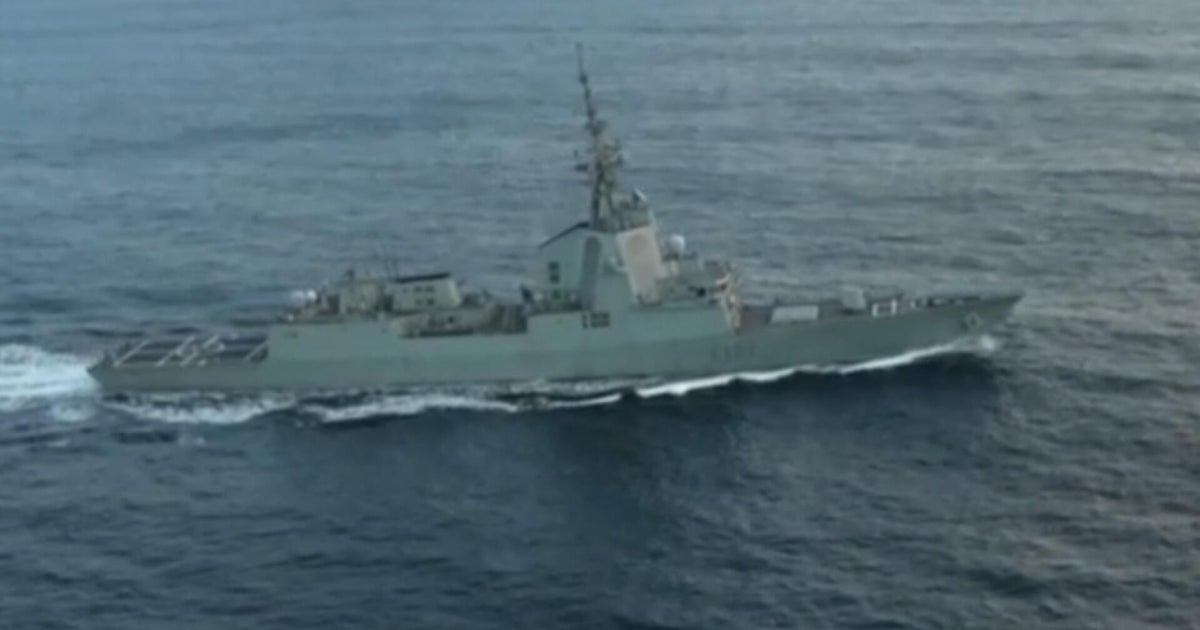
Bergen, Norway — In the frigid waters off the coast of Norway, America’s NATO allies are searching the depths for clandestine Russian activity.
This stretch of ocean, considered the gateway to the Arctic, is where the European High North meets the Russian High North, home to the Kremlin’s Northern Fleet.
Nuclear-armed Russian submarines are regularly dispatched from the sprawling naval base on the frigid Kola Peninsula, slipping silently beneath the waves before heading toward the North Atlantic.
CBS News joined the crew of a NATO warship to participate in exercises aimed at detecting, tracking and, if necessary, eliminating these submarines before they cross the narrow gap between them. GreenlandIceland and the United Kingdom, then to the east coast of the United States.
If war broke out between Russia, the United States and their NATO allies, the region would become a strategic bottleneck.
Commanders view Operation Arctic Dolphin – an exercise involving ships, submarines and aircraft from Spain, Germany, France, the United Kingdom and many other countries – as essential to maintaining the cohesion of a 75-year-old military alliance.
“Norway has the great advantage of being part of such a large alliance,” said Commodore Kyrre Haugen, commander of the Norwegian fleet overseeing the Arctic Dolphin. “But every nation benefits from being part of something that is bigger than itself.”
The commander said Norway had operated in the Arctic since the Cold War and the “special focus” on the region now highlighted how crucial it is to the security of Europe and the United States.
AFP via Getty Images 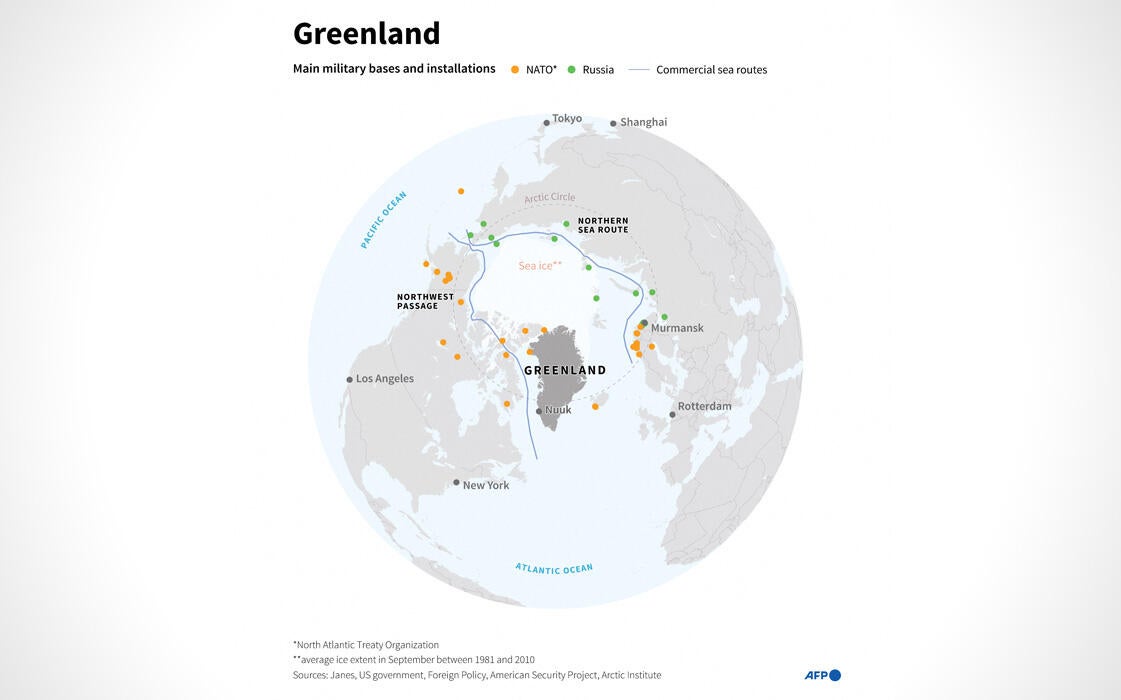
“These missiles can attack Europe, they can attack America by being deployed in deep waters, all the way to the Atlantic,” he said, referring to Russia’s arsenal.
The NATO exercises are just one aspect of a race to secure a region that has become “a frontline for strategic competition,” according to U.S. Air Force Gen. Alexus Grynkewich, NATO’s supreme allied commander in Europe.
Russia already uses the Arctic as a testing ground for its hypersonic missiles, designed to evade US air defenses.
But threats to regional stability have also emerged closer to home.
President Trump has angered NATO partners by repeatedly insisting that the United States must seize Greenland – and by threatening last month to impose tariffs on its allies if they do not comply.
He retreated this threat, announcing a still vaguely defined “ultimate long-term agreement” with American NATO allies in Greenland, but it regularly castigates these alliesaccusing them of not spending enough on their own defense.
Undeniably, the alliance is catching up in the Arctic and the Far North. Seven of the eight Arctic states are NATO allies. Yet Russia, with more than half of the Arctic coastline on its territory, has almost as many permanent bases in the region as all NATO members combined.
On the deck of the Spanish frigate ESPS Almirante Juan de Borbon, the commander defended to CBS News the contribution to NATO of Spain, which Mr. Trump recently accused of not being “loyal” to the alliance.
“I’m not going to get into the political dynamics,” Rear Admiral Joaquín Ruiz Escagedo said, before pointing to young naval officers busy in front of maps and radar screens. “But I would say that Spain’s contribution, you can see it here.”
Escagedo said the country has “a lot of capabilities” and is committed to NATO’s principle of collective defense.
“We cannot be isolated. The power of NATO lies in its unity,” he said. “This has been NATO’s success story for decades.”
This unit is about to be put to the test with a new mission.
A spokesperson for General Grynkewich, the U.S. NATO commander in Europe, confirmed to CBS News that planning for a mission in the Arctic region was underway.
Arctic Sentry will be an “enhanced vigilance activity aimed at further strengthening NATO’s posture in the Arctic and the High North.”
The spokesperson told CBS News that planning for the new mission “has only just begun, but details will follow in due course.”
The possibility of an Arctic Sentry mission was first raised by Britain’s top diplomat last month, as part of negotiations that helped resolve the conflict between Mr Trump and Europe over the fate of Greenland.
Foreign Secretary Yvette Cooper said the UK had offered to work “through NATO on a new Arctic sentinel, similar to what we already have through NATO — a Baltic Sentinel and a Eastern Sentinel“, referring to existing regional security partnerships between NATO allies.
“This is now going to be a focus of work within NATO, with different Arctic countries coming together and supported by other NATO countries on how we achieve that shared security,” she told CBS News partner network BBC News on January 22.


